

Freetown Christiania
Fifty years of negotiating a home out of an occupied barracks
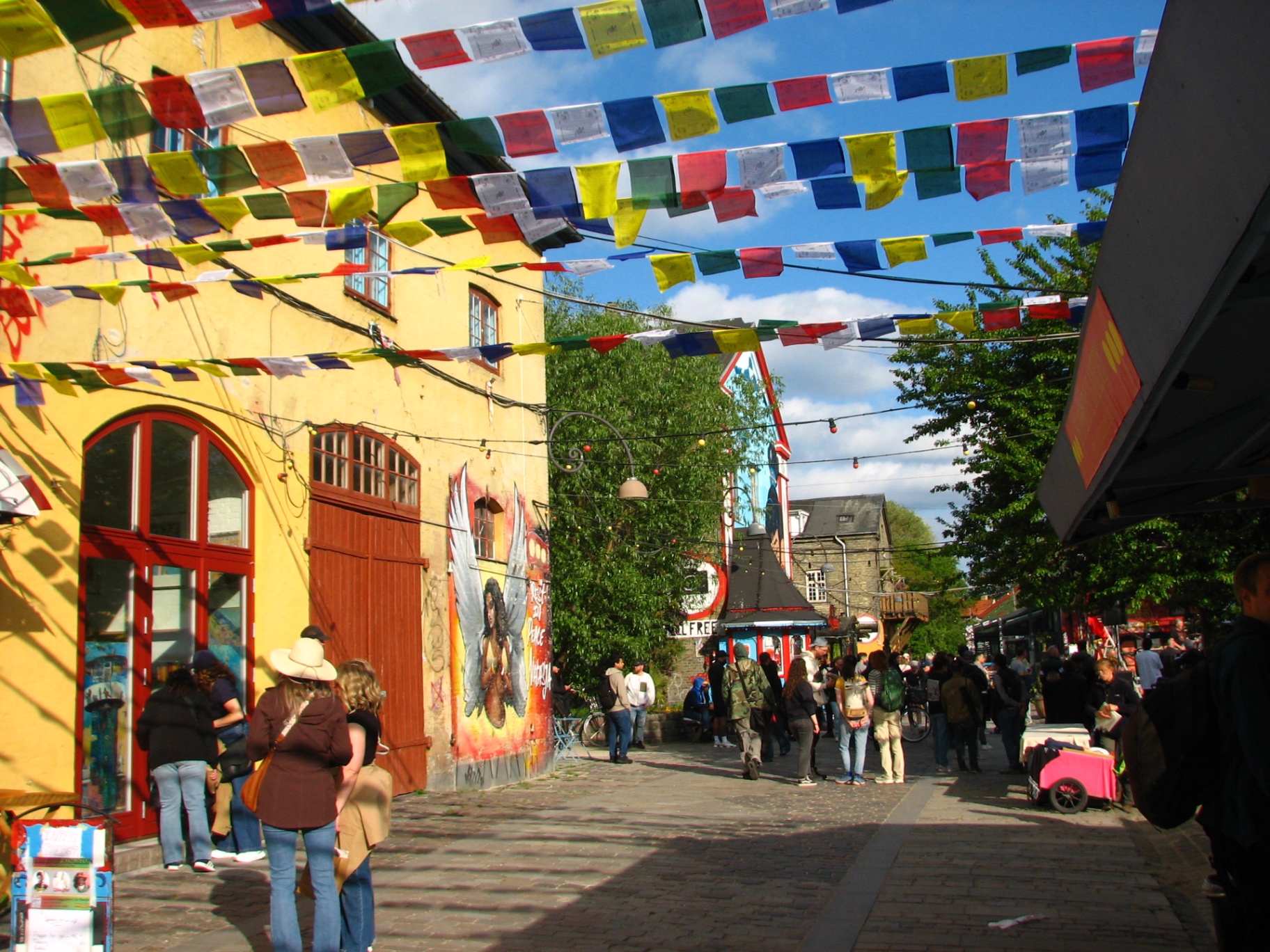
Christiania is the most ambitious case in this guide, and the most instructive about the long relationship between a community and the public body that owns the ground beneath it. What began in 1971 as an act of occupation, when residents cut through the fence of an abandoned military barracks, has become, over five decades, a legally recognised community that collectively owns much of its own land. The path from squat to stewardship was neither quick nor clean, and it is exactly that path, rather than the colourful surface, that other cities should study.
At a glance
- Then
- The abandoned Bådsmandsstræde military barracks in Christianshavn
- Now
- A self governing community of artists, residents and cultural venues
- Founded
- Declared open in September 1971
- Legal turning points
- The Christiania Act of 1989, the agreement of 2011, the foundation of 2012
- Owner
- The Foundation Freetown Christiania, with the state retaining the historic ramparts
- Scale
- Roughly 34 hectares, close to 1,000 residents, around 500,000 visitors a year
What it once was
The site is a former military barracks on the island of Christianshavn, a mixture of old fortifications, parkland and derelict buildings that had sat behind a rusting fence for years. In 1971, with the counterculture at its height, local families frustrated by the lack of playgrounds simply cut a hole in the fence. What started as space for children quickly drew waves of squatters, among them students, activists, artists and idealists, who claimed the empty barracks and, on 26 September 1971, declared the area a free town independent of Danish law. The Ministry of Defence, which owned the land, did not agree, and so began a confrontation that would last, in one form or another, for fifty years.
The practice worth passing on
Christiania survived not by winning its argument for total autonomy but by repeatedly choosing pragmatic, partial agreements over purity. The trajectory is worth setting out clearly, because it is a model for any informal or occupied cultural site seeking a secure future.
In 1989 the Danish Parliament passed the Christiania Act, which legalised the residents' tenure and ended the threat of eviction, in exchange for a permit system that required official approval for changes to buildings and land. It was a concession of autonomy in return for security, and it closed the era of constant uncertainty.
Then, after several years of bitter negotiation that at one point saw the area sealed off, the residents agreed in June 2011 to establish a foundation that would collectively purchase the land from the state at less than market value. On 1 July 2012 the Foundation Freetown Christiania made its first payment and the residents, having secured a bank loan of several million euros, became legal landowners forty years after they had arrived as squatters. Part of the funds was, and still is, raised by selling symbolic Christiania shares to supporters around the world.
The arrangement is itself a lesson in sensible division. The foundation owns the land and buildings outside the protected ramparts, while the state retains the seventeenth century fortifications and the central natural areas and leases them to the community. The most heritage sensitive ground stays with the public owner; the rest passes to the people who live on it and care for it. Rents within Christiania were raised so that the community could fund the repair of its military era buildings, turning residents from occupants into custodians with a financial stake in preservation.
Legal pragmatism need not be a betrayal of values; it can be what preserves them.
Self governance with accountability
Christiania makes its decisions by consensus rather than by majority vote, with the area divided into smaller districts that each hold regular meetings. The move to a foundation governed by a board, after decades of purely communal assemblies, was experienced by some as a painful compromise of founding principles. But it was also what made the community legible to the state and therefore able to own property at all. The honest summary offered by observers is that Christiania endured by becoming a little more like Denmark, while Denmark allowed itself to tolerate Christiania. Two structural factors helped: a population large enough to sustain itself yet small enough for direct democracy to function, and a steady flow of visitors whose presence gave the community both an economy and a public visibility that protected it from quiet elimination.
A community that keeps reckoning with itself
The most recent chapter shows that the work of stewardship is never finished. For decades the cannabis trade on Pusher Street was the community's most notorious feature and a significant source of revenue, though it remained illegal under Danish law and many residents never supported it. After a series of violent incidents, the residents themselves decided in 2024 to dismantle the street and to ask the state for help in doing so, a remarkable instance of a community choosing to confront the hardest part of its own identity. In parallel, a longstanding agreement with the City of Copenhagen now envisages new housing within the enclave, a prospect that divides residents between those who welcome new energy and those who fear the loss of the original spirit. The lesson for any living cultural site is that its relationship with the authorities, and with its own values, requires continual renegotiation rather than a single settlement.
The cultural life within
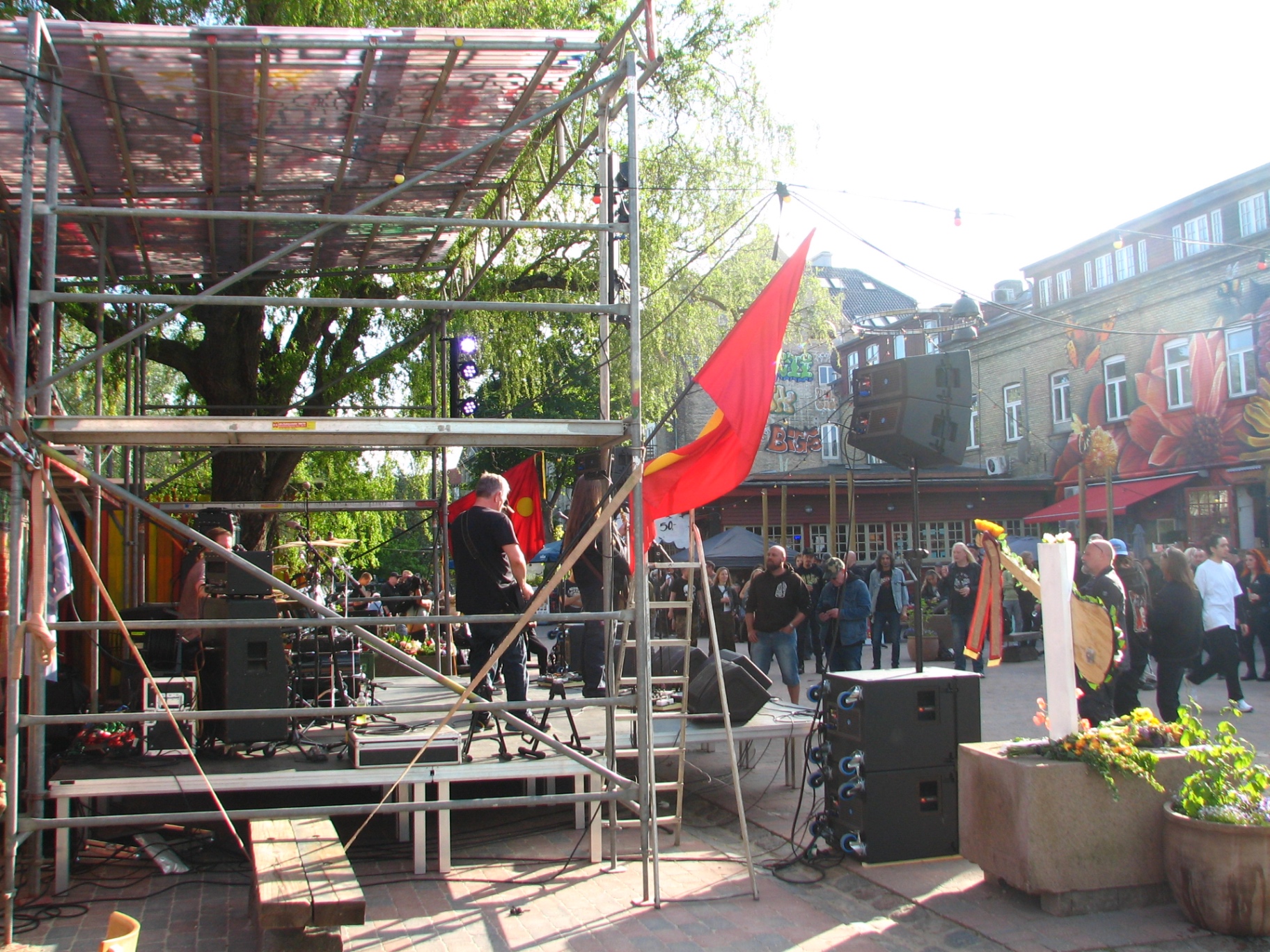
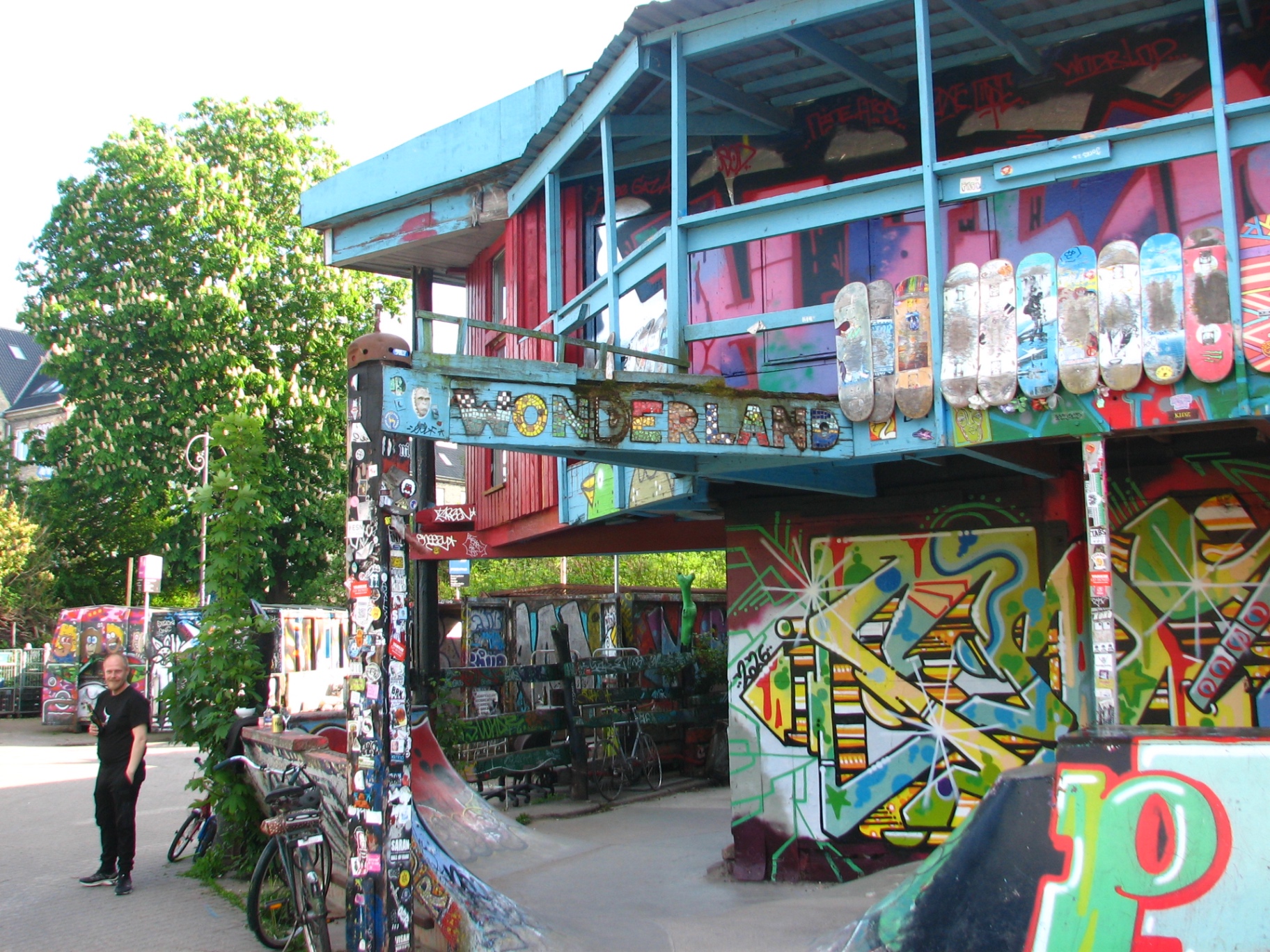
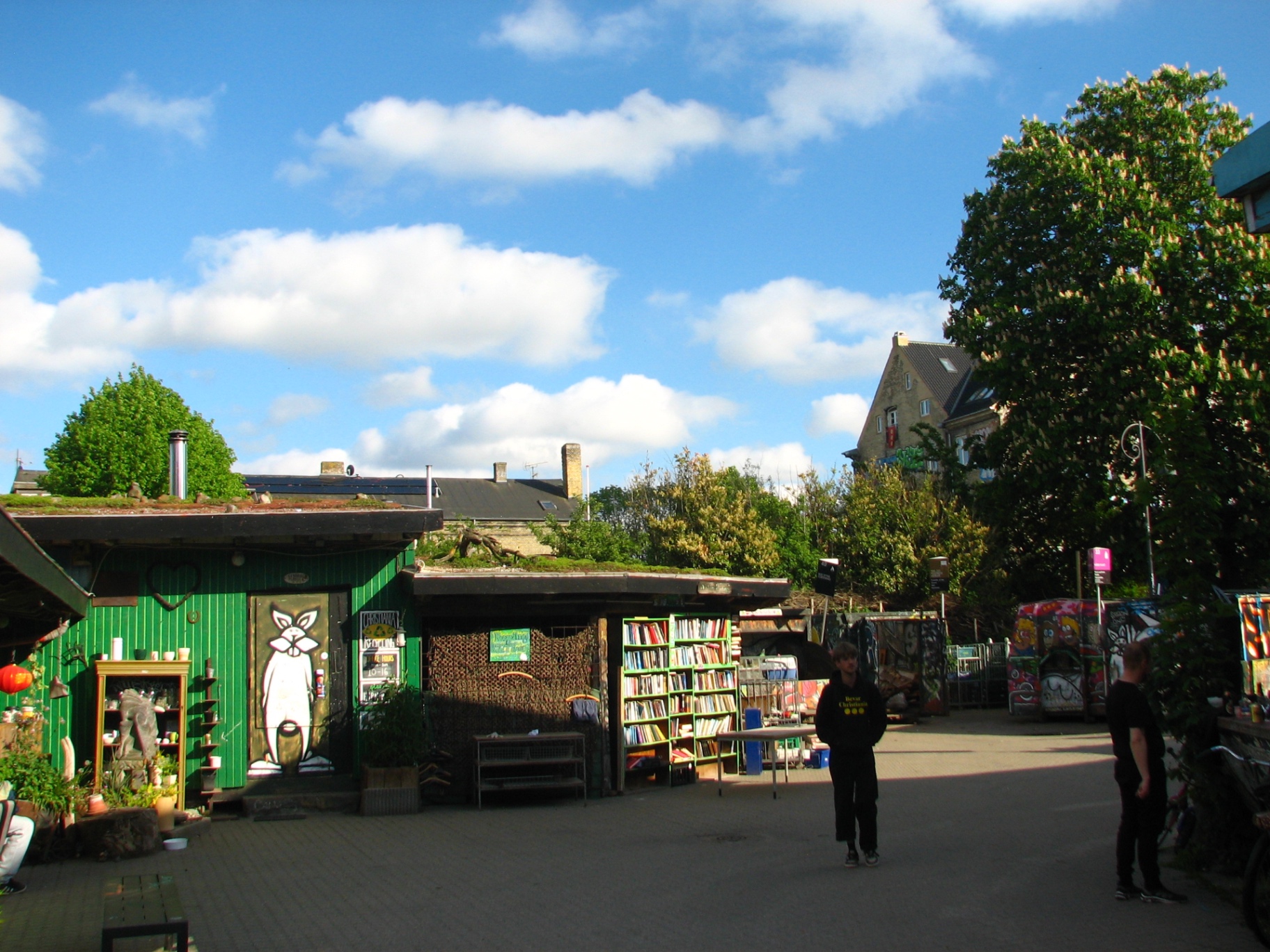
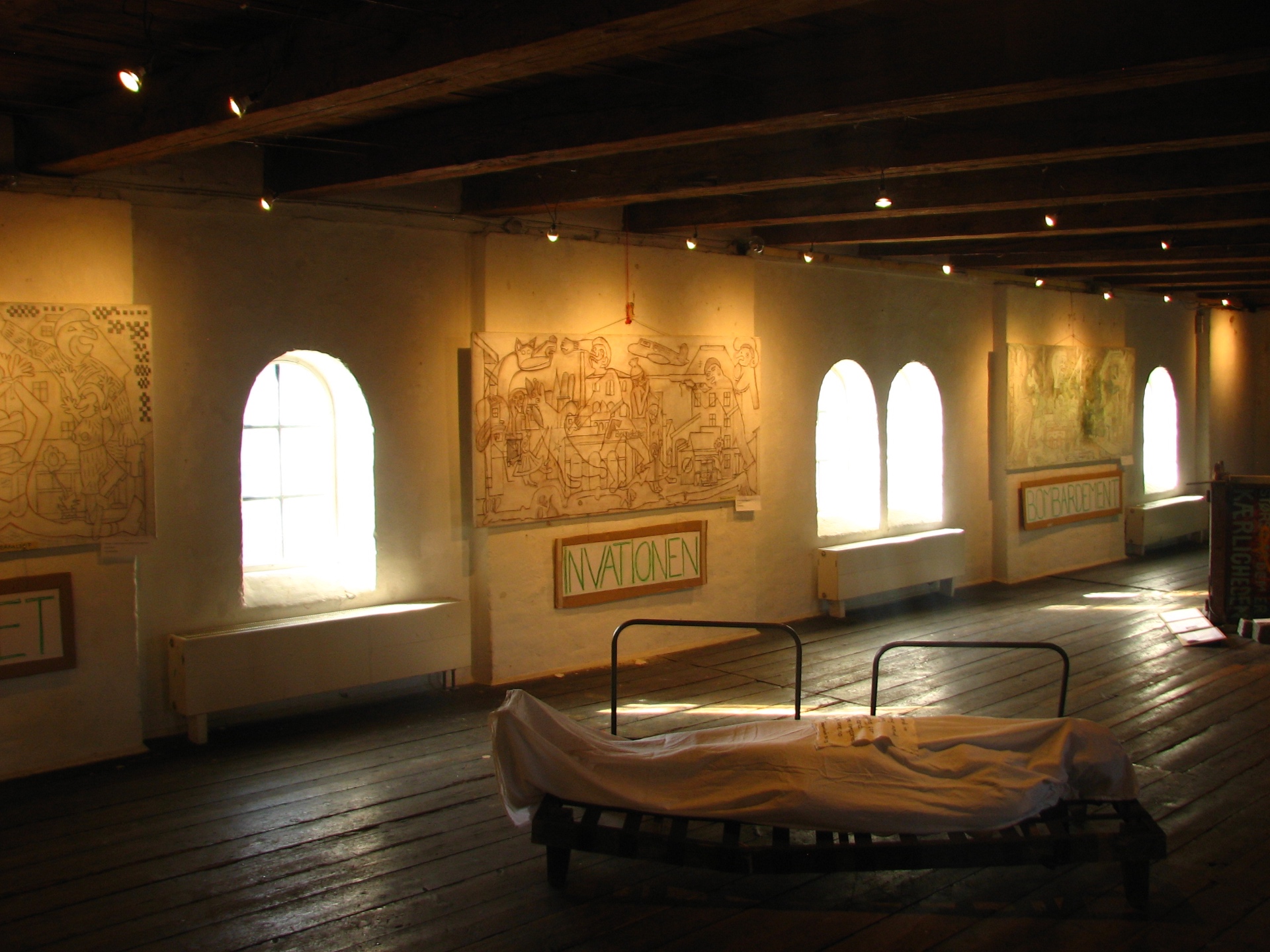
Beneath the politics, Christiania is a working cultural quarter. Its largest hall, Den Grå Hal, a former military riding house, is one of Copenhagen's distinctive concert and event spaces, and the community sustains music venues, galleries, studios, a celebrated skatepark and a long running public science and culture evening. Many residents built their own homes, giving the area an architectural character found nowhere else, and the community has long practised the sustainability now sought everywhere: a district closed to cars, with shared gardens, recycling, composting and renewable power.
Guidance for municipalities and operators
For owners and public authorities
Christiania suggests that formalising an informal cultural community is better approached as a sequence of negotiated steps than as a single grand settlement. Security of tenure offered early, as in the 1989 law, can transform a relationship of conflict into one of cooperation. A collective legal vehicle, such as a foundation, gives an otherwise unaccountable community a body the authority can actually contract with. And retaining the most sensitive heritage assets in public hands while transferring the rest is a workable way to protect what matters most without smothering the community that gives the place its life.
For operators
Legal pragmatism need not be a betrayal of values; it can be what preserves them. Accepting a structure the authorities can recognise, raising the funds to take real responsibility for the buildings you occupy, and being willing to confront the difficult parts of your own story are what turn a tolerated presence into a permanent one.
Today
Christiania remains home to close to a thousand people and welcomes around half a million visitors a year to its car free lanes, painted houses and cultural venues in the heart of Christianshavn. It is, after half a century, both a genuine neighbourhood and an ongoing experiment in living differently within a modern state.
Sources: CNN Travel; France 24; Wikipedia (Freetown Christiania); the Foundation Freetown Christiania; Contiki; additional reporting. Photography by Zala and Pol.