

Øksnehallen
The hall built for cattle, now built for gathering
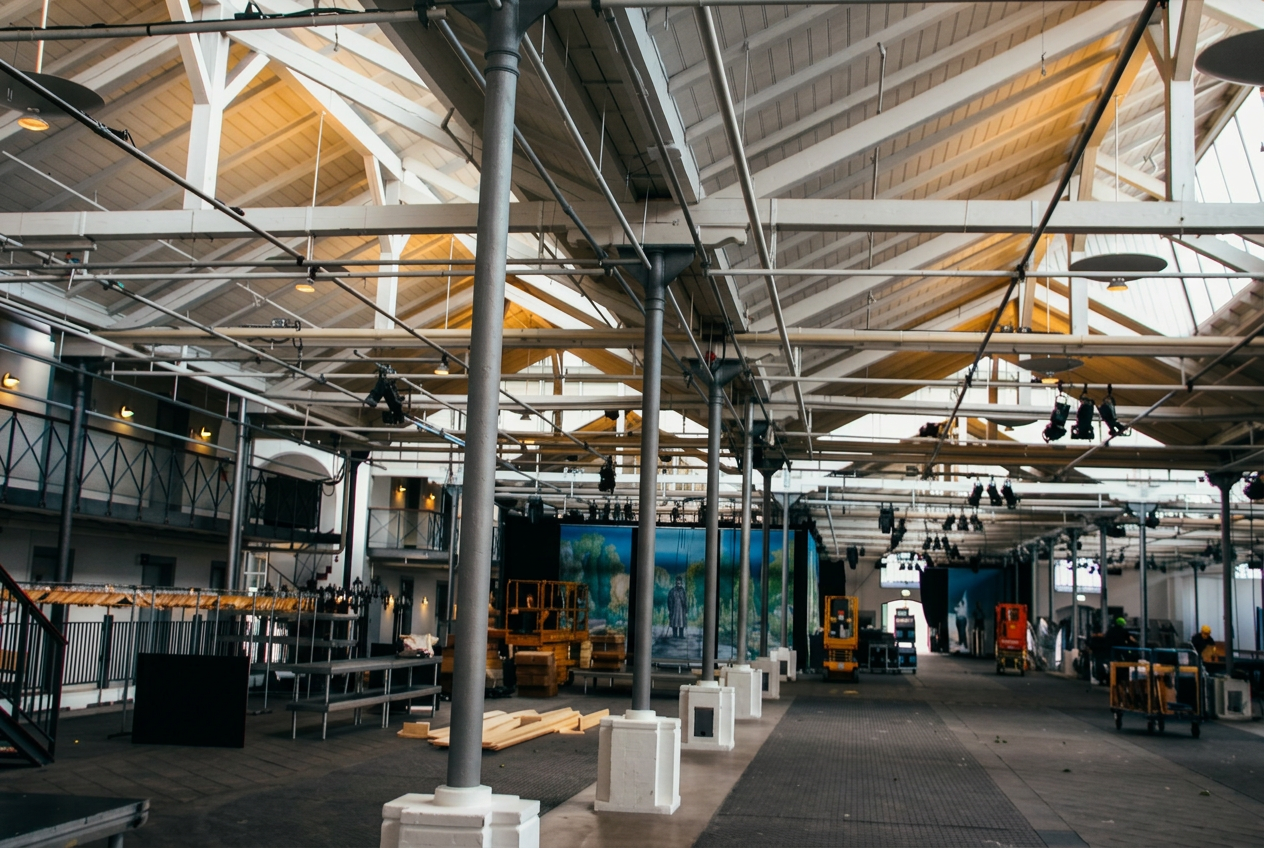
Øksnehallen is a vast, dignified hall in the heart of Copenhagen's old Meatpacking District, the Brune Kødby. Its name comes from øksne, an old Danish word for ox, and for a brief period at the start of the twentieth century it was exactly that: the central hall where cattle were brought, held and traded before being moved on. Today it is one of the city's most established venues for exhibitions, conferences, fairs and fashion shows, and its story offers one of the clearest lessons in this guide about what it means to be a good tenant of a public building.
At a glance
- Then
- The central cattle hall of Copenhagen's livestock market
- Now
- An exhibition and events venue of roughly 5,200 square metres
- Built
- 1901, by city architect Ludvig Fenger
- Cultural rebirth
- Renovation from 1993, public cultural use from Culture Capital 1996
- Owner and operator
- The City of Copenhagen, leased to and run by DGI Byen
- Capacity
- A comfortable range of around 1,000 to 1,500 guests
What it once was
The hall opened in 1901 as part of the Brown Meatpacking District, designed by the city architect Ludvig Fenger, with room for some 1,600 animals. It served that original purpose for only about two decades. The city grew faster than the market could, the trade outgrew the space, and by the 1930s the activity had moved to the larger White Meatpacking District nearby. What followed was a long, quiet middle age. For many years the hall was little more than a warehouse and a place for taxi drivers to park, a single great volume that no one visited and that was slowly falling apart. Its rescue began in the early 1990s, when the City of Copenhagen started the conversion that turned it from a forgotten store into a hall for cultural and commercial events.
Authenticity as the core value
Ask the people who run Øksnehallen what they actually sell, and the answer is not square metres. It is authenticity. A large empty volume can be found, or built, almost anywhere; what cannot be manufactured is the history held in the original timber, the cast pillars and the worn proportions of a working building. Clients come from all over the world to gather their guests in a place with a real story, because the feeling of standing inside something genuinely old cannot be reproduced in a new building on an open field. That conviction is worth stating plainly, because it reframes heritage not as a constraint to be tolerated but as the single most valuable thing the building has to offer.
There is a quiet poetry in how little has changed beneath the surface. When the hall hosts a trade fair, the stands are laid out in rows along the floor in almost exactly the pattern the cattle once stood in. The purpose of the building has held steady; only the goods on display have changed.
Insist that what you receive back is not only money but cultural value.
Working with the municipality
This is the heart of what Øksnehallen has to teach, and it is unusually honest.
The building is owned by the City of Copenhagen and held by its operator on a lease that runs for ten years and is then renegotiated. The crucial detail is that the lease asks for two things, not one. The operator pays rent, which is the obvious part, but the agreement also obliges the operator to stage cultural events that are open to the public. The arrangement is therefore designed so that the municipality receives both money and cultural value in return for the building.
The operator's advice to other municipalities follows directly from this, and it is worth keeping close to the original: make an agreement a little like ours, where the municipality receives money, because that is the baseline. But insist that what you receive back is not only money but cultural value, and evaluate it continuously. What does the company that runs this venue give back to the city?
The reasoning behind that advice is candid to the point of self examination. A commercial operator, left to its own incentives, will tend toward the money, because that is what a commercial operator does. Their conclusion is the lesson: a municipality should be genuinely concerned about what an operator does with a building it has been entrusted with, and should build into the agreement a way to evaluate and measure that contribution, rather than setting the terms once and looking away for a decade.
It is also worth being precise about responsibilities. At Øksnehallen the interior upkeep, the painting and the floors, falls to the operator, while the exterior remains the municipality's responsibility. That division has been a recurring point of discussion, which is itself instructive: such things should be written down clearly, because an old building will always need work, and ambiguity about who pays for what becomes friction over time.
A final, sobering note for owners. Most of the genuine cooperation happens during the renegotiation of the lease, when both sides set out what they expect of the next ten years. Between those moments, the relationship is largely predetermined. That makes the negotiation window precious, and it makes clarity at that moment more important than goodwill in the years that follow.
Heritage as a discipline
Because the building is listed as city heritage, much of what the operator might wish to do is simply not permitted, and this shapes daily practice in revealing ways. No air conditioning can be added, so on the hottest July days the hall is genuinely uncomfortable, and yet clients return for the atmosphere regardless. More tellingly, fixtures may not be screwed into the historic woodwork. Cables and pipes are mounted instead with metal bands wrapped around the timber, and almost everything the operator installs is temporary and must be removed again. A handful of permanent fixings have been allowed, sparingly, but the working assumption is reversibility.
This is harder than running a plain black box venue elsewhere, and the operator is honest about that. But it is also a model worth borrowing. When you cannot alter the protected fabric of a building, designing every intervention to be temporary and removable is not only a legal necessity; it is a discipline that keeps the building intact for whoever comes next.
The 1993 renovation deserves credit for foresight that was ahead of its time. The roof, which appears to be timber panelling, is in fact soft acoustic board chosen to improve the sound. The bricks were made by mixing material from the old roof with concrete, an early act of reuse. The hall was given what was then the largest underfloor heating system in the country, and rainwater is collected in tanks and recycled to flush the toilets. All of this was done before sustainability and green waste management had entered everyday conversation.
On content and curation
One reflection from our conversation reaches beyond Øksnehallen itself. It is not enough to save a space; what you put inside it matters just as much. The operator pointed admiringly to LX Factory in Lisbon, a former industrial site whose shops and tenants are carefully chosen to remain relevant to their place. The warning was equally clear: the same space could easily be ruined by filling it with generic tourist shops. First you secure the space, and only then do you decide what it is for. Curation is not decoration; it is the difference between a living building and a hollow one.
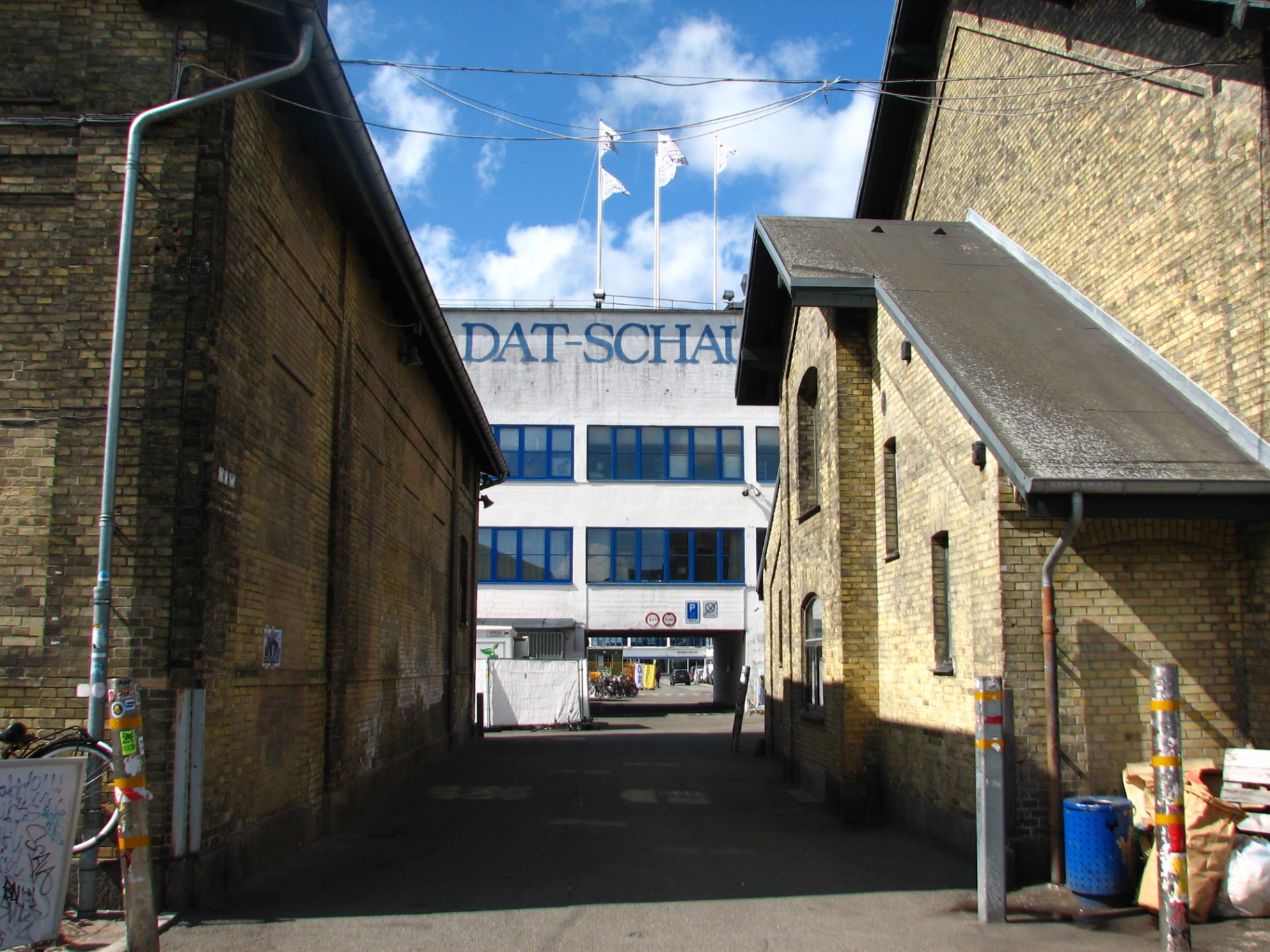
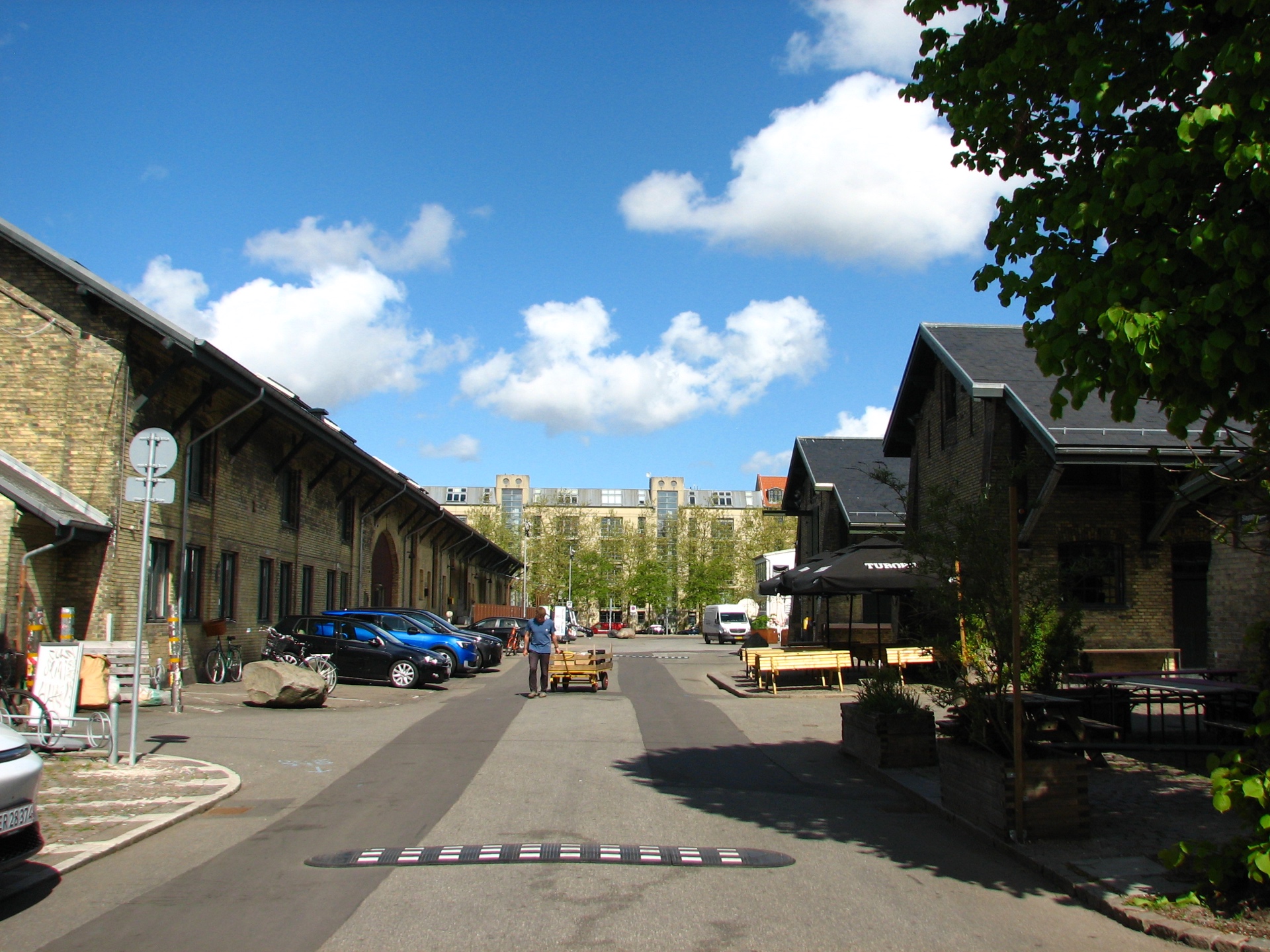
It is no coincidence that the buildings immediately around Øksnehallen, all of the same period and architecture and once tied to the work of the market, now house a music school, an art school and photography studios for the city's young people. A district saved as a whole, and filled with the right life, becomes a genuine creative quarter rather than a single restored curiosity.
Guidance for municipalities and operators
For owners and public authorities
Charge rent, but make cultural contribution an explicit and measurable condition of the lease, not a hope. Decide how you will evaluate that contribution, and revisit it. Be clear in writing about who maintains the building, inside and out. And be deliberate about access: a publicly owned building should be reaching the public, not only paying clients.
For operators
Treat the building as borrowed, because it is. Caring for the fabric is necessary but not sufficient; making the place available to the city and giving something back to those who come is part of the bargain you have made. Design your installations to be reversible. And remember that the renegotiation of your lease is when your relationship with the owner is actually made, so prepare for it long before it arrives.
Today
Øksnehallen now hosts conferences, dinners, trade fairs and fashion shows, including during Copenhagen Fashion Week, with a comfortable capacity of around 1,000 to 1,500 guests, and mounts public exhibitions in the quieter summer months. It has been operated by DGI Byen since 2005 and sits in the Brune Kødby on Halmtorvet, a short walk from Copenhagen Central Station, at the centre of a district that has become one of the city's most vivid examples of industrial heritage given a second life.
Sources: DGI Byen; Wikipedia (Øksnehallen, Kødbyen, DGI-byen); interview transcript (on site, May 2026). Photography by Zala and Pol.