

Dansehallerne
A boiler house that became a national stage for dance
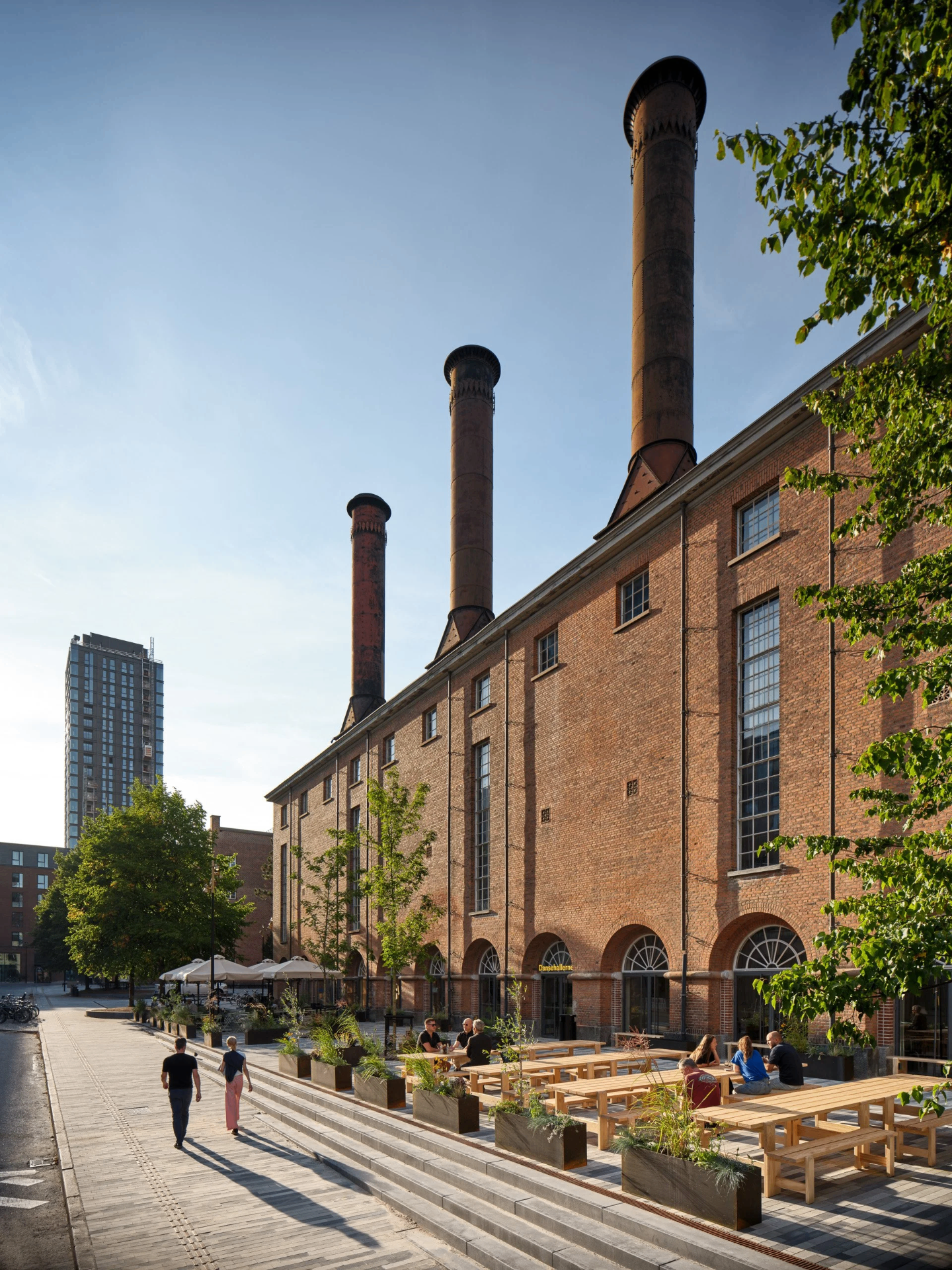
For nearly a century, the building now known as Dansehallerne kept the Carlsberg brewery running, supplying the steam and hot water that beer depends on. Today, in the same vast hall where coal once fired enormous boilers, dancers rehearse and perform on the national stage for contemporary dance. Its story is the clearest example in this guide of how a building too large and too specialised to be commercially obvious can still be saved, provided the money is assembled in the right way.
At a glance
- Then
- Kedelhuset, the boiler house of the Carlsberg brewery
- Now
- Dansehallerne, the national centre for dance and choreography
- Built
- 1925 to 1928, by the architect Carl Harild
- Cultural rebirth
- Opened in its new home on 31 August 2024
- Transformed by
- Mikkelsen Arkitekter
- Size
- A listed building of 4,600 square metres
What it once was
Kedelhuset, literally the boiler house, was the engine room of the Carlsberg empire. Completed in 1928 to a design by Carl Harild, it produced the steam and hot water for brewing and supplied energy to the whole site. Enormous coal fired boilers filled the upper hall, while on the ground floor workers drew off water and raked out slag from the furnaces. It remains one of the finest examples of functional industrial architecture of its period, built in red brick with deep arches and tall windows. In 2008, after more than a century and a half of brewing on the site, Carlsberg ceased production, the boilers went cold, and the district began its long reinvention as the Carlsberg City quarter.
The practice worth passing on
The decisive lesson here is financial rather than architectural. The transformation of Kedelhuset cost in the order of 170 million Danish kroner, and it was possible only because no single party carried the burden alone. The developer, Carlsberg Byen, donated the building itself, valued at around 21 million kroner, rather than selling it. The City of Copenhagen contributed through a loan of nearly 32 million kroner carrying neither interest nor instalments. Philanthropic foundations, the Augustinus Foundation among them, covered substantial parts of the renovation.
For any city holding a derelict but listed industrial building, this braiding of public, private and philanthropic contributions is the model worth studying. The most striking move is that the property itself became the developer's stake in the project. Treating the building as a contribution rather than as an asset to be sold removes the single largest obstacle to reuse, and it shields the venue from the commercial rents that would otherwise make a cultural use impossible.
The property itself became the developer's stake in the project.
Keeping the soul, not only the shell
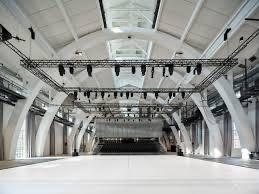
The architectural strategy was deceptively simple: to stage the old building rather than to disguise it. Pipes and installations remain visible, as they were when the hall still made steam, and the new stage technology is suspended from the restored overhead structure, so that the industrial frame quite literally holds up the dance. New elements were designed to enter into dialogue with the historic ones, so that old and new reinforce each other and nothing pretends the boilers were never there. It is a useful principle in its own right: when a building's character lies in its working past, the most respectful renovation makes that past legible rather than hiding it.
Patience as part of the process
The institution itself offers a quieter lesson about time. Dansehallerne was formed in 2012 from the merger of two organisations, and for years it lived just across the way in a former Carlsberg bottling store before moving out in 2017 when the site was redeveloped. It spent the intervening years in temporary premises before finally settling permanently into the boiler house in 2024. A cultural institution may spend the better part of a decade in transit before reaching its permanent home, and a project of this ambition should be understood as the work of many years rather than a single season.
Guidance for municipalities and operators
For owners and public authorities
The most powerful contribution a public or corporate owner can make is sometimes the building itself, donated or transferred rather than sold. Paired with a loan free of interest and the support of cultural foundations, this approach can carry a project that no commercial calculation would ever justify. Consider what you can contribute in kind, not only in cash.
For operators
Where a building's value lies in its industrial past, resist the urge to conceal it; let the structure remain visible and let new work converse with the old. And plan for the long horizon, because securing and adapting a building of this scale is measured in years. Temporary premises and patience are part of the path, not a sign that the project has stalled.
Today
Dansehallerne is now the working heart of contemporary dance for Copenhagen and for Denmark as a whole, a meeting place for choreographers from across the Nordic region and beyond, with a public programme, professional training and a membership pass for regular audiences. It stands at the centre of the Carlsberg City District.
Sources: VisitCopenhagen; Wikipedia (Tap E); Mikkelsen Arkitekter; Dansehallerne; Wonderful Copenhagen; Danish Design Review. Photography by Zala and Pol.