

KoncertKirken
A neighbourhood church the community chose to buy
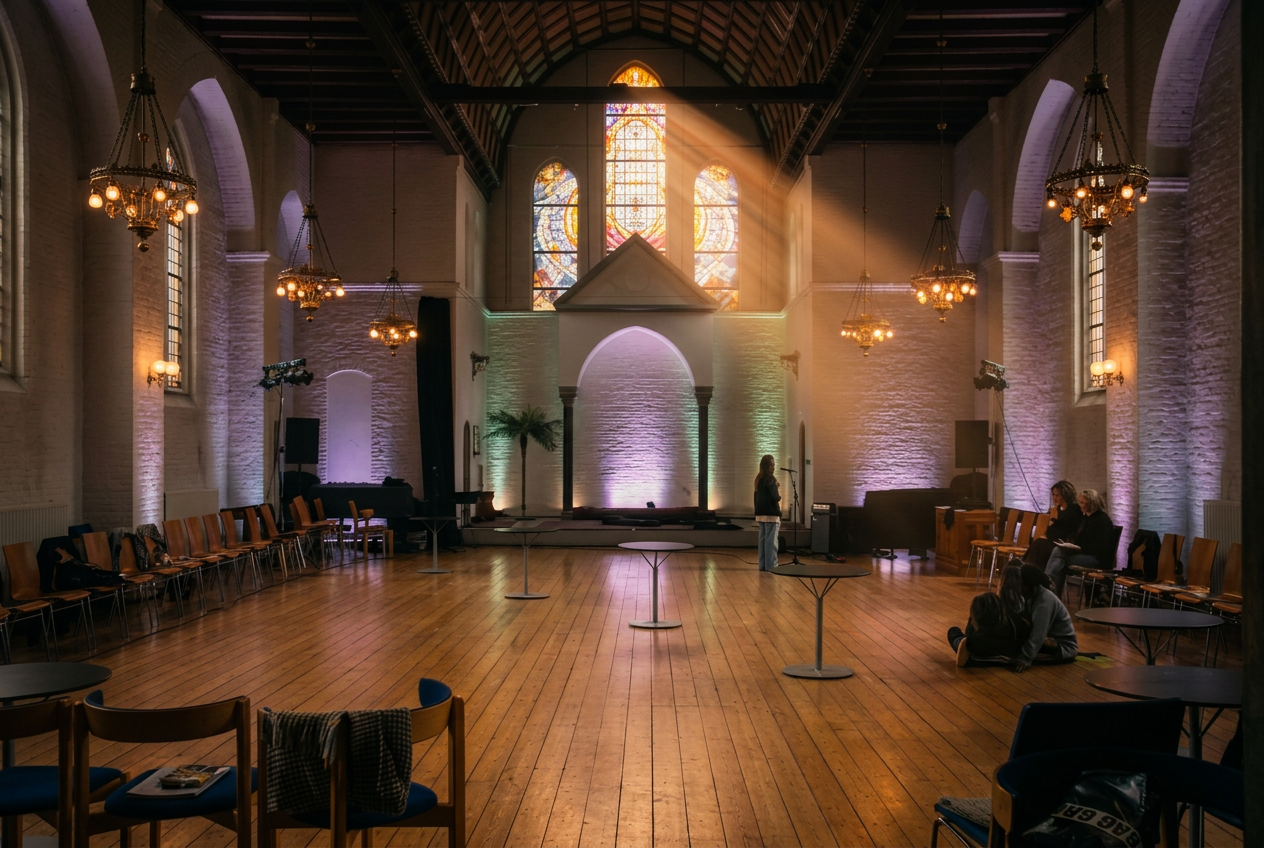
When Copenhagen decided to close several of its churches, most were sold to new owners who would convert them. KoncertKirken is the one where the people already using the building refused to leave, and instead bought it themselves, one small share at a time. It is the clearest example in this guide of community ownership as a deliberate strategy, with all the freedom and all the burden that owning an old building brings.
At a glance
- Then
- Blågårds Kirke, a parish church
- Now
- KoncertKirken, the first concert church in Denmark
- Built
- Consecrated around 1925, turning one hundred this year
- Cultural rebirth
- Programming began in 2009; the building was purchased in 2015
- Owner and operator
- Owned by KoncertKirken itself, a community share company
- Output
- Between 230 and 250 concerts a year, almost one a day
What it once was
The building is a church of about a hundred years on Blågårds Plads, in the Nørrebro district. By around 2005 it had fallen out of daily use, and by 2010 Copenhagen was openly debating that it held too many churches in the city centre. An initial proposal to close fifteen, after long discussion and protest, settled on five. Those five were taken out of religious use and sold for new lives, and this is one of them.
The practice worth passing on
The defining decision at KoncertKirken was to own rather than to rent. The collective constituted itself as a community share company and sold shares for just 1,000 kroner each, to musicians, to local residents and to the wider public. That income, together with grants from major foundations and borrowed money, funded the purchase of the building from the church fund in 2015, after a campaign of roughly two years.
The benefit of this model runs in two directions. Financially, hundreds of small shareholders gave the project deep roots in its neighbourhood, and they gather for their assemblies in the building, so it also serves as a genuine local meeting place. Practically, owning the building means owning one's freedom. During the pandemic, while municipal venues were closed entirely, KoncertKirken was able to continue rehearsals and streamed concerts, because no external landlord could prevent it.
The honest counterweight is that ownership is, in the team's own comparison, like buying a house rather than renting one. You gain complete autonomy, but you are also left responsible for a building of a hundred years that is slowly ageing, with a new roof costing several million kroner already on the horizon. Whether to buy, they conclude, depends entirely on the building, the owner and the country, and in some places churches are simply never for sale.
Owning the building means owning one's freedom.
Keeping the shell, changing almost nothing
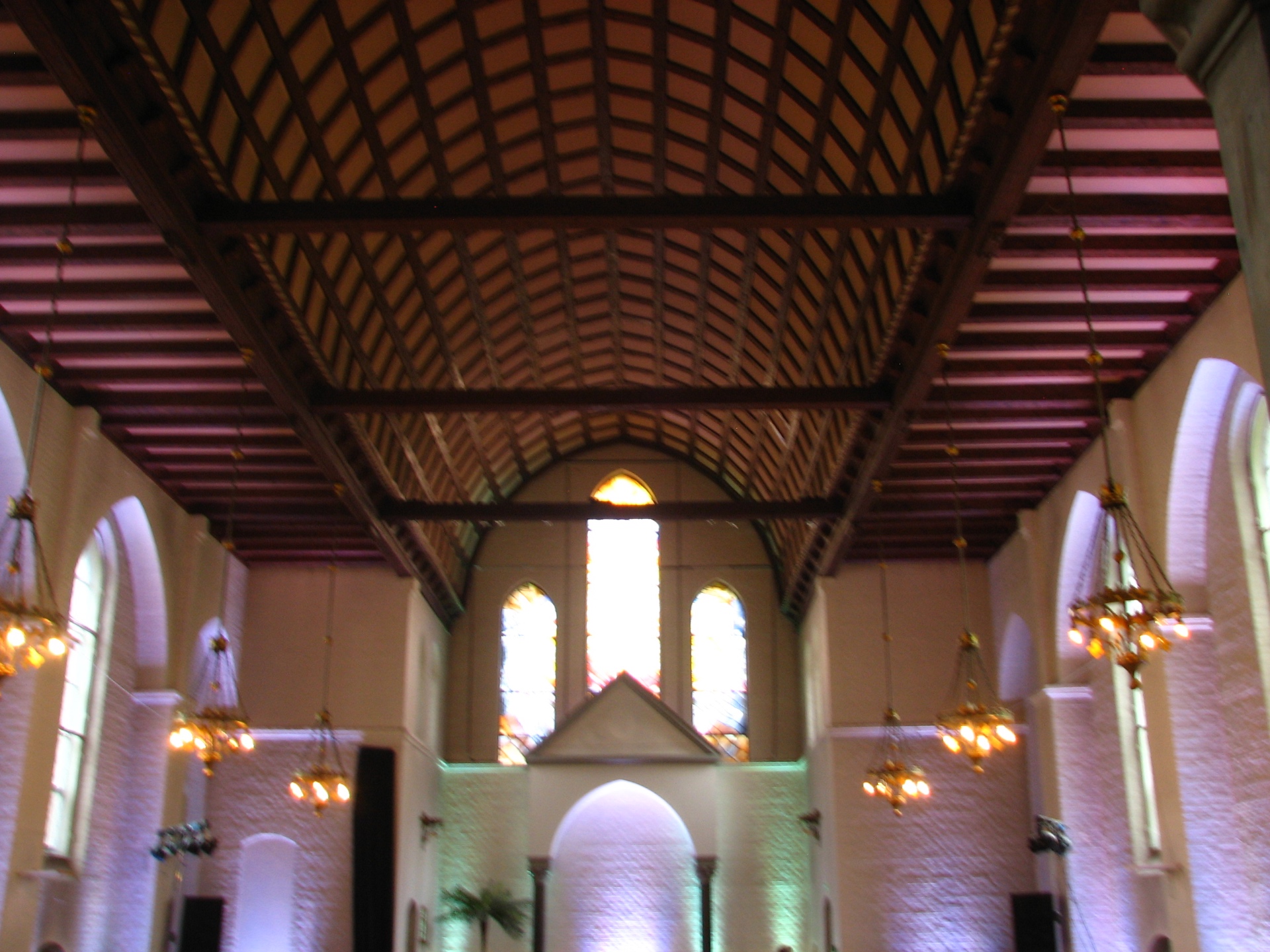
The exterior is essentially untouched. Inside, the overtly ecclesiastical fittings were removed, the floor was renovated, a stage was built over the old altar, and the priest's room became a backstage. The largest recent undertaking was to bring a building that, as a church, had almost no fire regulations up to the strict code required of a concert hall, with new walls downstairs to form fire escapes. All of this is invisible from the street; the main hall, the original lamps and the recently restored organ have all been kept.
The room as the instrument
The argument against gutting the place is both acoustic and atmospheric. Built as a church, with a wooden floor and church proportions, the hall has some of the finest acoustics in Copenhagen, so fine that the venue declines loud rock concerts because they do not suit the room. With no traffic nearby, the silence when the doors close is complete, and musicians are encouraged to play with that silence as a material in itself. It is a quality that cannot be manufactured in a modern hall, because churches are no longer built this way; it can only be inherited. The programme is correspondingly broad, from early and classical music to the experimental and the niche, alongside larger festivals, rehearsals, recordings, secular ceremonies and communal dinners. The venue runs as a nonprofit, on a few part time staff and around thirty volunteers.
An unresolved question of identity
The name itself, concert church, was borrowed from a German model, and the team continues to debate whether to keep the religious word. It honours the building's identity and the acoustics that flow from having been built as a church. Yet Blågårds Plads is home to a large Muslim population, and some neighbours hesitate to enter a building that looks like, is named like, or might still be a church. It is a thoughtful and genuinely unresolved tension between honouring heritage and remaining open to everyone, and it is worth naming honestly rather than resolving too quickly.
Guidance for municipalities and operators
For owners and public authorities
When a public building is being released, selling to the community already using it can secure both the building's future and its roots in the neighbourhood. A model that lets ordinary people buy small shares spreads both the cost and the sense of belonging, and it tends to produce a more committed steward than an arms length tenant.
For operators
Ownership is freedom and burden in equal measure. Before buying, weigh the autonomy it brings against the long obligation of maintaining an ageing building, and be clear that the decision depends on your particular building, owner and country. Where the value of a space lies in qualities that cannot be rebuilt, such as acoustics, protect them rather than modernise them away. And be willing to sit with the difficult questions, such as who feels able to walk through your door, rather than assuming the answer is settled.
Today
KoncertKirken stages nearly a concert a day across every imaginable genre and draws musicians from around the world in search of its acoustics. It stands on Blågårds Plads, in Nørrebro, and turns one hundred years old this year.
Sources: KoncertKirken; The Copenhagen Post; Copenhagen Jazz Festival; interview transcript, on site, May 2026. Photography by Zala and Pol.